Our Waters. Our Voices.
A PROPOSED CULTURAL + CONSERVATION ENGAGEMENT PROJECT
A participatory installation and digital archive inviting the publics to share observations, lessons, memories, and practical ideas for keeping Florida waters healthy and fishable.
Project Overview
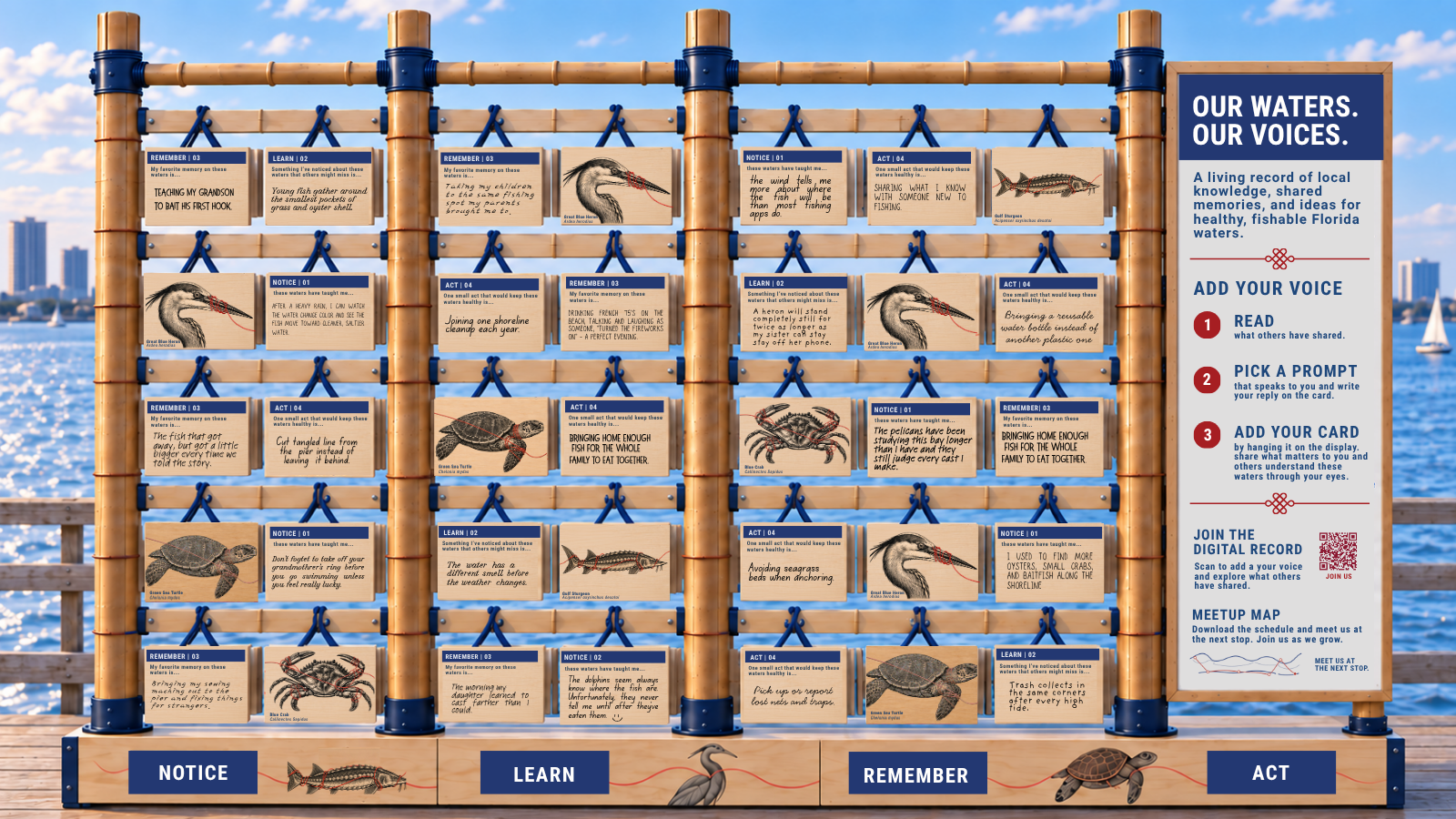
Concept rendering of Our Waters. Our Voices, a traveling waterfront display of community stories, memories, local knowledge, and ideas on conservation.
Our Waters Our Voices is a proposed traveling waterfront installation and digital archive. It invites people who frequent Florida fishing piers, waterfront parks, beaches, and community events to contribute short field notes, or observations, lessons, memories, and practical conservation ideas that form a public record of local knowledge, shared experience, and community-generated ideas for keeping the waters communities depend on healthy and fishable.
The project is informed by the collective-display tradition of Japanese ema, in which individual wishes, hopes, or expressions of gratitude are written on small wooden plaques and displayed together.
The Engagement Model
Our Waters Our Voices turns individual reflection into a visible shared record, creating a moment for people to notice what matters to their community at waterfront locations where fishing is part of everyday life. It also offers an opportunity to contribute personal knowledge, memories and ideas, recognize what others value, and become connected to conservation initiatives as potential community advisors or future volunteers. The project raises awareness of ghost gear and ghost fishing, where fishing equipment lost to the water continues to fish on its own, at locations where mindset and everyday behaviors can have an immediate impact on water, wildlife, and public spaces.
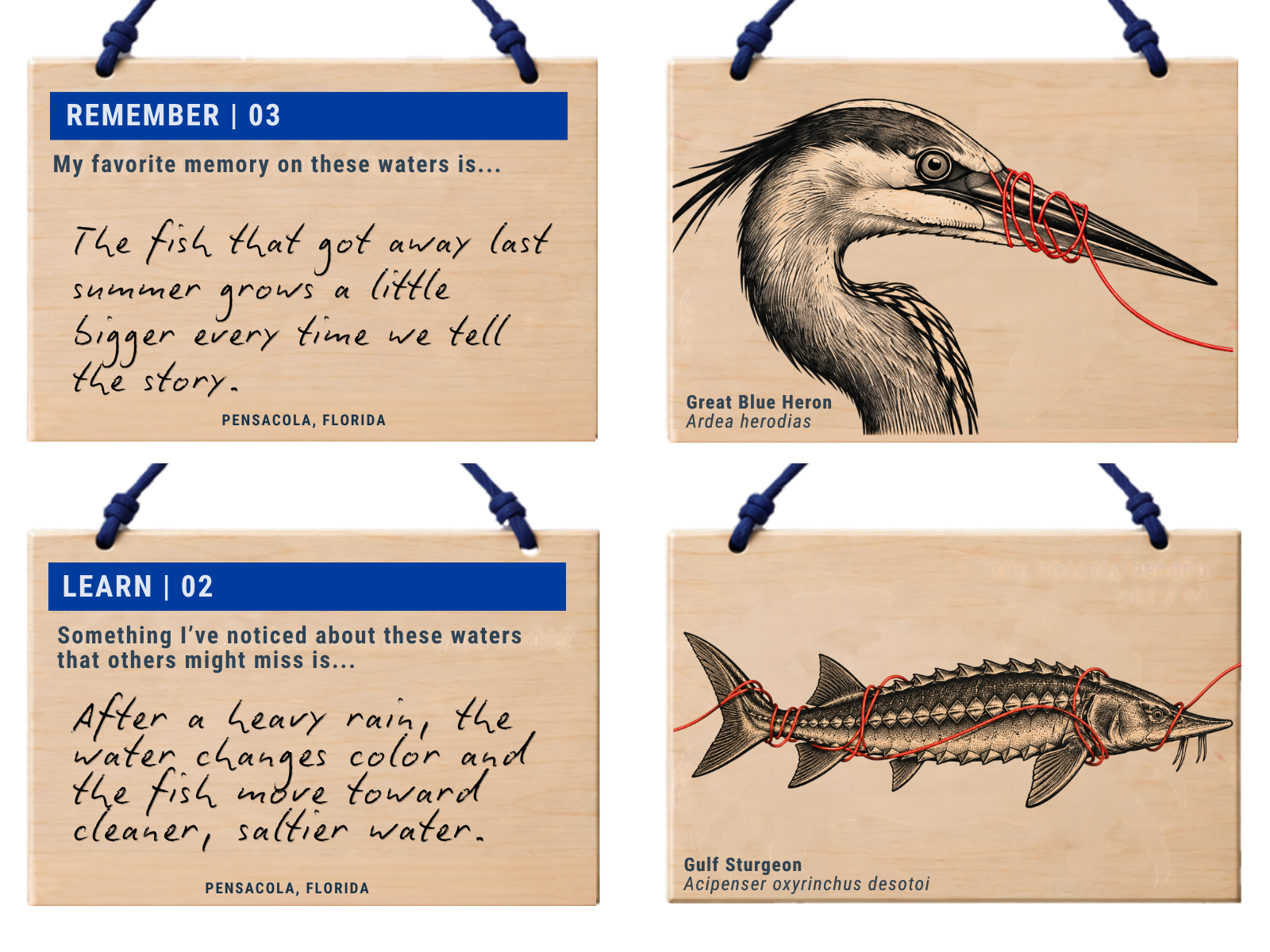
Card Design
The front of each wooden card presents one of the project’s prompts, space for a handwritten response, and the name of the participating site.
The reverse features a print of local species affected by ghost fishing with a woven or printed red line that makes this often hidden threat visible.
Each card is hung from durable recovered fishing line.
How It Works
Visitors encounter a portable display of small wooden cards hung together at fishing piers, waterfront parks, beaches, and community events. Visitors can read contributions already shared by others, and participate by choosing a blank card with one of four short prompts, adding their handwritten reply and adding it to the display or submitting a response digitally by scanning a QR code.
During selected hours, a facilitator will engage visitors, invite participation, and lead informal conversations. When the display is unstaffed, visitors can read the displayed cards and scan the QR code to submit a digital response, read the digital record, view the project schedule and locations, and join local clean ups.
Add Your Voice
Visitors can choose one of the following prompts and respond in their own words. Each prompt offers a different way to reflect on the waters they use, what they have learned, what they value, and how they might help keep local waters healthy.
NOTICE - Something I’ve noticed about these waters that others might miss is…
LEARN - These waters have taught me…
REMEMBER - My favorite memory on these waters is…
ACT - One small step that would help keep these waters healthy is…
DIGITAL PARTICIPATION - Scan the QR code to add your voice, read the digital record, and stay connected.
Engagement Strategy: From Shared Attention to Action
A single card captures one person’s experience. Displayed together, multiple cards make shared values visible: pride in a fishing spot, concern for birds and marine life, memories passed between generations, and a desire for clean, accessible, fishable water. This collective visibility supports the project’s goal of raising awareness of our community assets, a making people care, a precondition for taking action.
Contributing a note also creates a pause for reflection at a waterfront where everyday decisions can directly affect the water. It shifts a visitor from passive observer to contributor; the QR pathway then offers an opportunity to remain connected as a source of local knowledge, a potential community advisor, or a future volunteer.
Research suggests that attachment to a specific place is positively associated with pro-environmental intentions. Studies and reviews have found positive relationships between place attachment and environmental behavior or behavioral intentions, while emphasizing that engagement must be locally relevant and that intention does not always translate into action on its own.
Cultural Reference: Japanese Ema
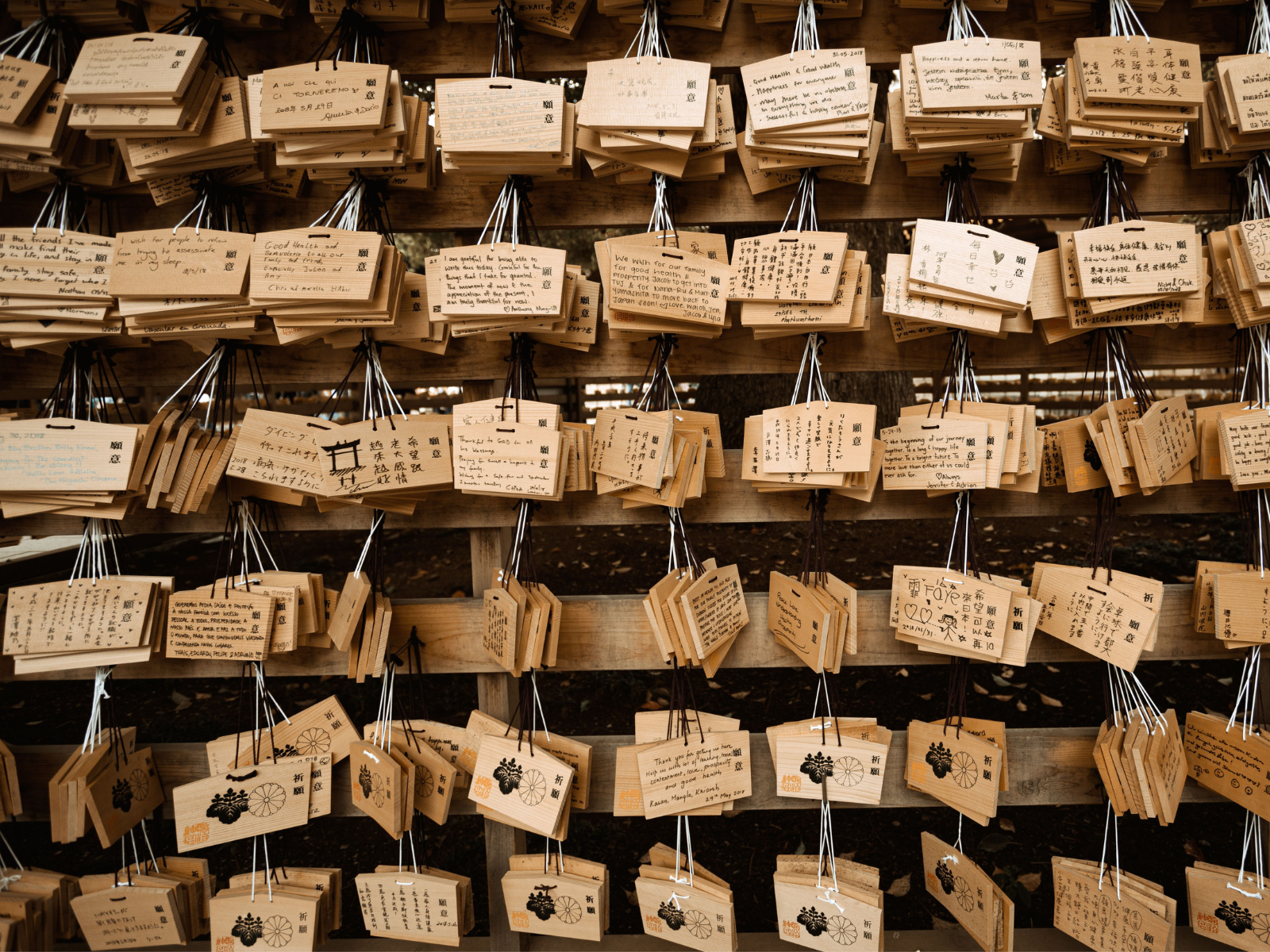
Ema - A Japanese tradition of displaying individual wishes, prayers, and expressions of gratitude.
The project is informed by the collective-display tradition of Japanese ema—small wooden votive plaques on which people write wishes, prayers, or expressions of gratitude and traditionally hang together at shrines and temples.
Our Waters Our Voices is a contemporary, local interpretation of the underlying participatory idea: individual reflections, gathered visibly, can reveal shared values, knowledge, care, and ideas for a place. The visual reference to ema is expressed through a visible field of wooden cards, adapted into a traveling format suited to waterfront locations in Florida.
Development of the project will seek guidance and participation from Japanese and Japanese American cultural partners in Northwest Florida, ensuring that this reference is acknowledged thoughtfully as it is translated into a distinct local form.
Proposed Pilot: Pensacola Bay Fishing Bridge
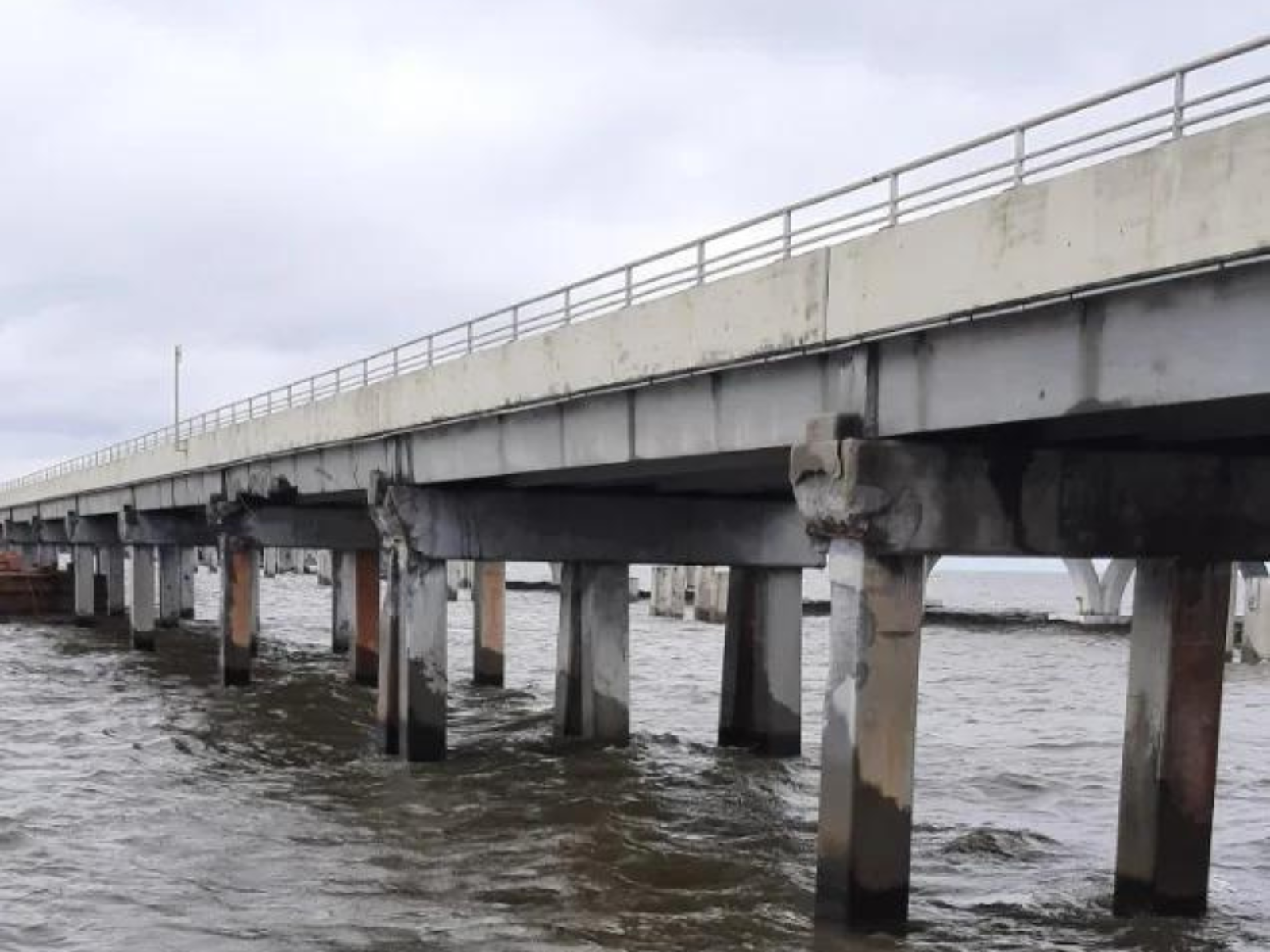
Proposed Pilot Site - The Pensacola Bay Fishing Bridge under reconstruction.
The Pensacola Bay Fishing Bridge being rebuilt beside Wayside Park offers a timely opportunity for the first Our Waters Our Voices installation. Introducing the project as the pier returns to public use could begin collecting community knowledge, memories, and ideas from the outset, helping cultivate connection, well-being, and a shared culture of conservation. This highly visible pilot could provide a foundation for learning, refinement, and future installations at other waterfront locations between Pensacola and Destin.
Interested in Collaborating or Learning More?
Whether you’re interested in collaborating, sharing expertise, supporting Our Waters Our Voices, or following its development, I’d love to hear from you.