Creating Calm & Connection in Public Spaces With Play-Based Sensory Design
Play-Based Sensory Design & Creative Strategy.
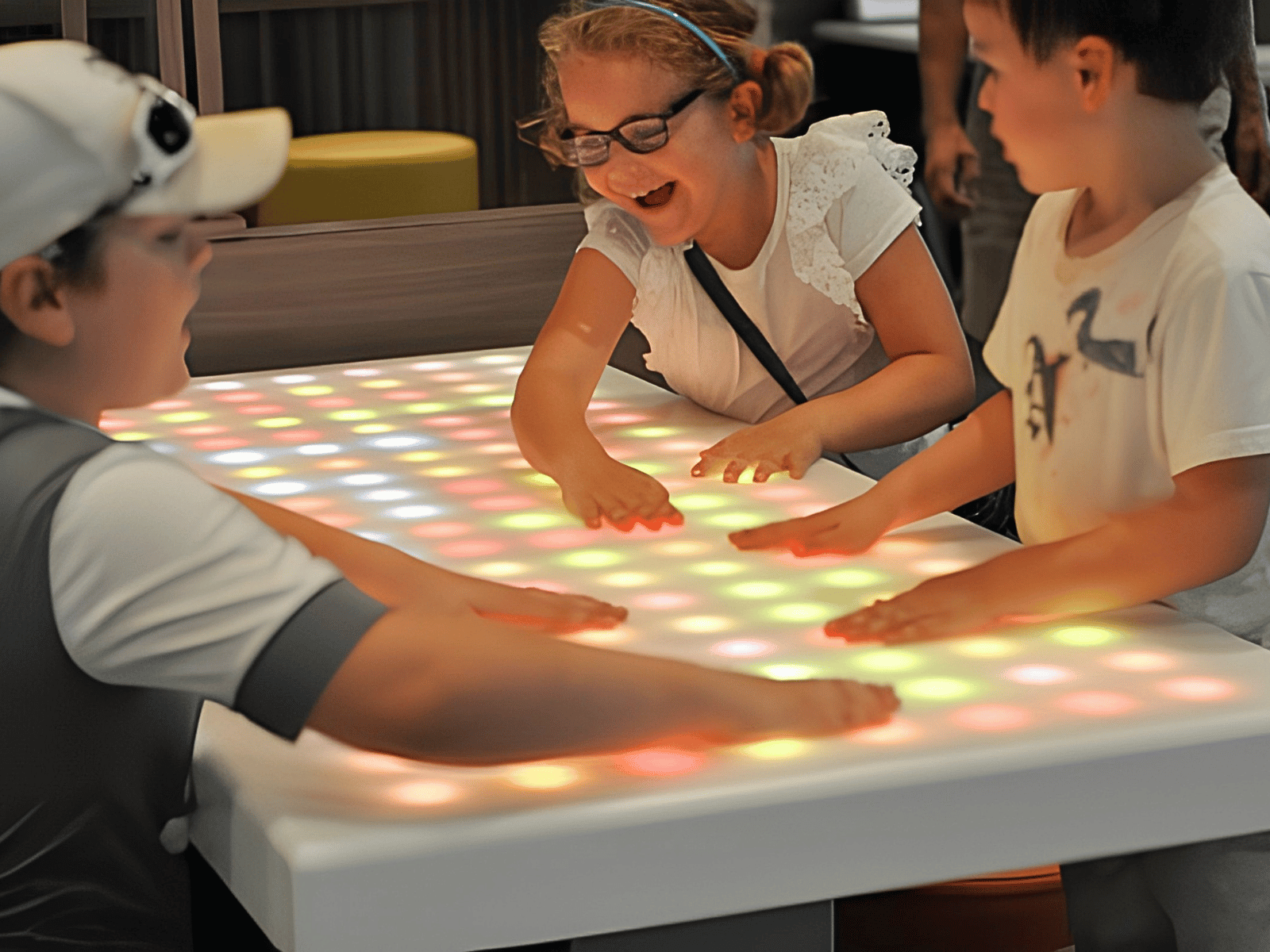
I developed the creative strategy and sensory-inclusive positioning for a portfolio of interactive experiences that use play as a pathway to calm, connection, and greater participation in public life.
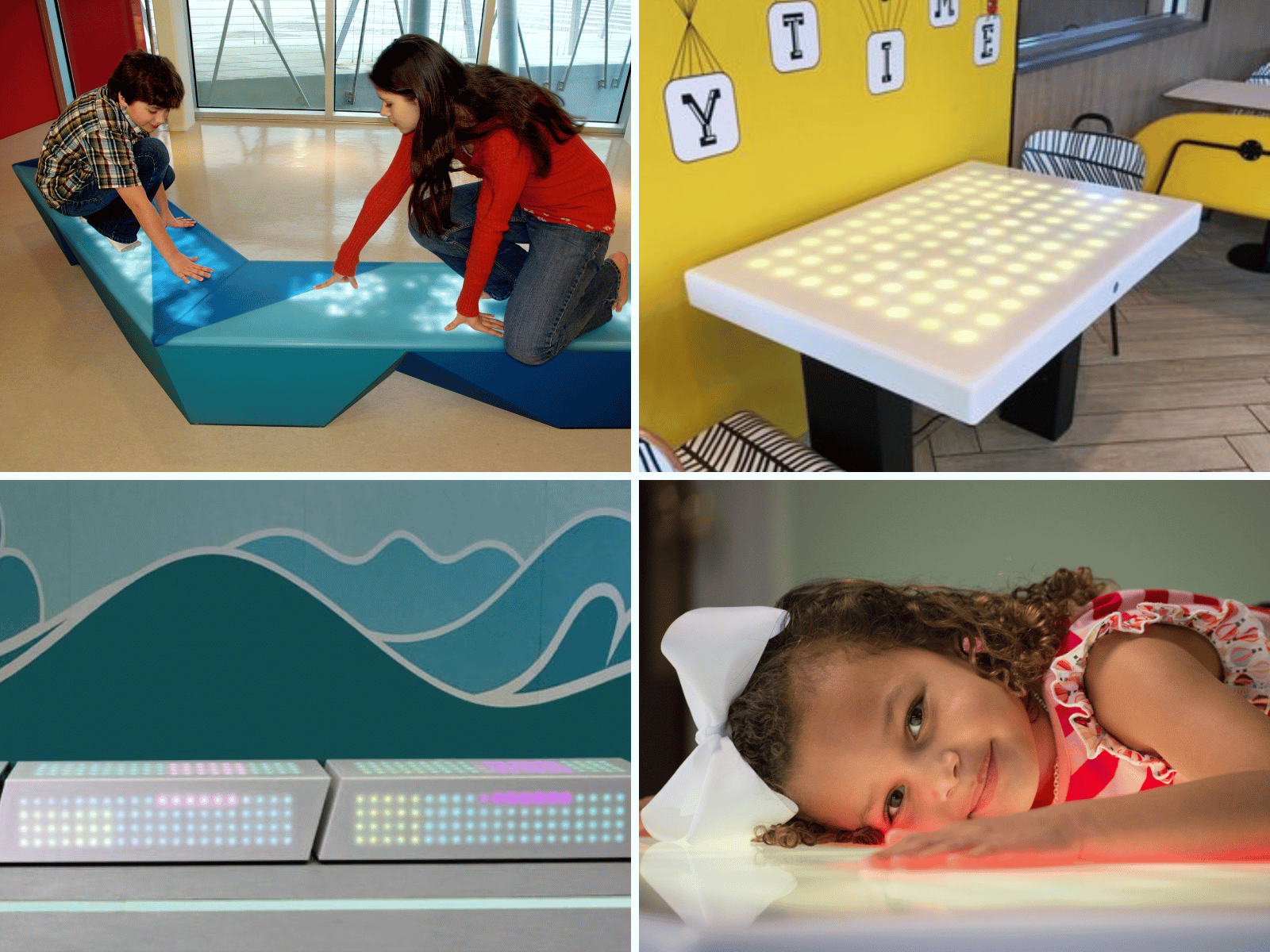
At NunoErin, I led concept development, guided our team's design process, and oversaw the implementation of interactive tables, benches, and wall panels that combine physical touch with responsive light and color to introduce unexpected moments of discovery, delight, that enabled deeper engagement in everyday public spaces.
The Challenge
Make everyday public spaces more welcoming, engaging and inclusive.
Restaurants, entertainment venues, and other shared public spaces can be noisy, stimulating, and stressful. For people with sensory processing differences, these environments can create barriers to participation. For families navigating busy daily routines, they can also make it difficult to slow down, relax, and enjoy meaningful time together.
The opportunity was to create engaging, inclusive experiences that introduce moments of calm, delight, and connection into everyday life. Rather than asking people to withdraw from stimulating environments, we wanted to help them feel more comfortable, present, and able to participate fully in shared public experiences.
The Strategy
Play as a Pathway to Calm and Connection
Curiosity & play → Self-regulation → Connection → Greater participation
The central insight was that play and sensory regulation could reinforce one another. By introducing unexpected moments of discovery into familiar public environments, we could invite people to pause, redirect their attention, and engage with the present moment through an enjoyable sensory experience.
The design approach combined intuitive physical interaction with responsive light and color, creating experiences that encouraged curiosity, focused attention, and playful exploration. These calming, uplifting sensory experiences supported self-regulation and positive social connection across ages and abilities, creating a pathway to greater participation in public life without singling out or separating people with particular sensory needs.
RELATED PROJECT
Research Informed Education Campaign
A complementary example of translating sensory research and customer insights into a coordinated communications campaign connecting sensory-supportive environments with student regulation, classroom participation, and learning.
Developed for educators, school leaders, and distribution partners, the campaign integrated research-informed messaging across digital content, marketing, and sales channels.